


Dwarves and Clowns - Diego Velázquez
The Spanish painter Diego Velázquez (1599- 1660) makes a series of paintings which he uses as a figure of dwarves and clowns, whose mission is to entertain the king in order to explain human nature. In these portraits, he places the model's head close to the top edge of the canvas. They depict their figures as if they were in a narrow, limited world, crouched in two bending situations. Velázquez had been in the king's servants' classrooms before he became a palace painter. In other words, he was familiar with the figures in which he shared his experiences before starting the paints.
Velázquez also illustrated observations of harmless mentally patients suffered by nature. He recorded their physical quirks and confused minds with honesty, without being sarcastic and caricature.
With Velázquez's elegant brush, the dwarves and clowns were immortalized and revived.
The Buffoon Calabacillas, 1635-1639

Museo del Prado, Madrid, Spain.
Portrait of Francisco Lezcano, 1635-1645
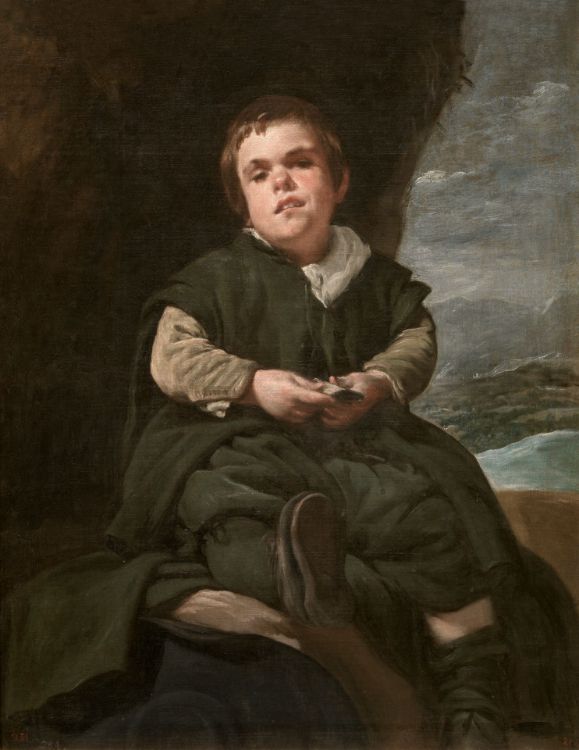
Museo del Prado, Madrid, Spain.
The Buffoon Diego de Acedo, c. 1644
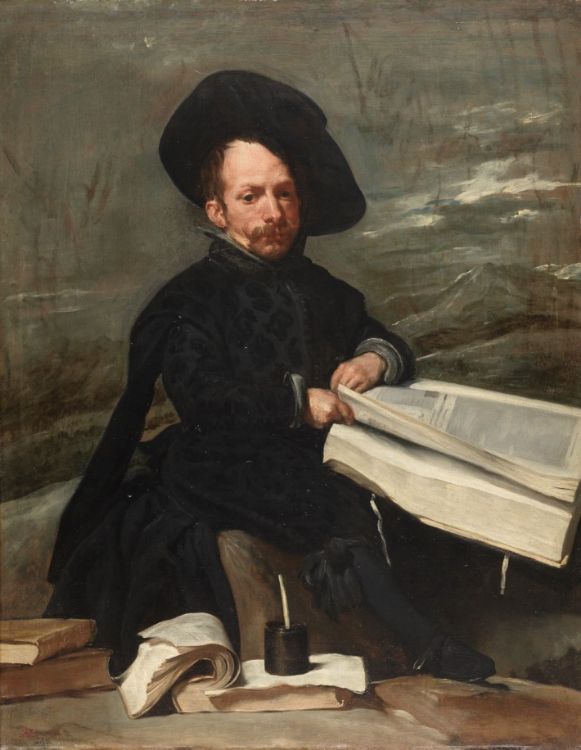
Museo del Prado, Madrid, Spain.
Portrait of Sebastián de Morra, 1644
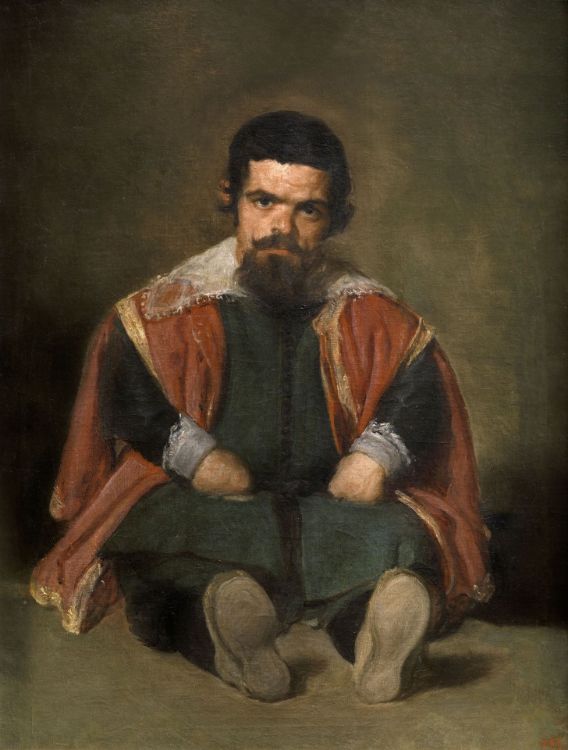
Museo del Prado, Madrid, Spain.
The Jester Known as Don Juan de Austria, c. 1632
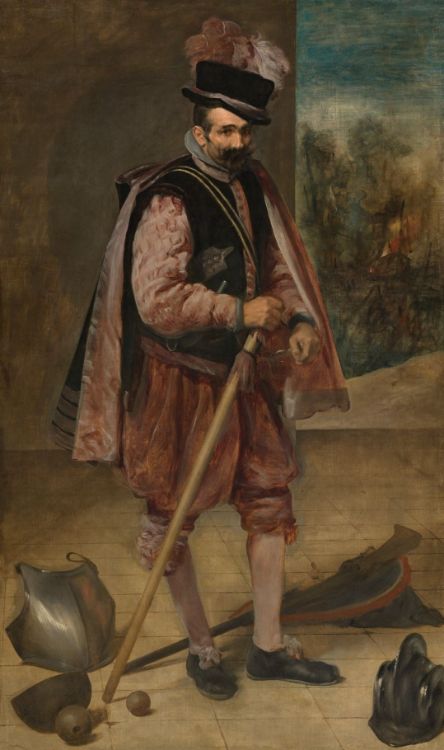
Museo del Prado, Madrid, Spain.
The Buffoon Don Cristóbal de Castañeda y Pernia (Barbarroja), c. 1633

Museo del Prado, Madrid, Spain.
Portrait of Pablo de Valladolid, c. 1635

Museo del Prado, Madrid, Spain
Bibliography;
Wolf, N., (2005). Velázquez, Birinci Baskı, Taschen/Remzi Kitabevi, İstanbul.
Altuna, S., (2013). Ünlü Ressamlar Hayatları ve Eserleri, Birinci Baskı, Hayalperest Yayınevi, İstanbul.